
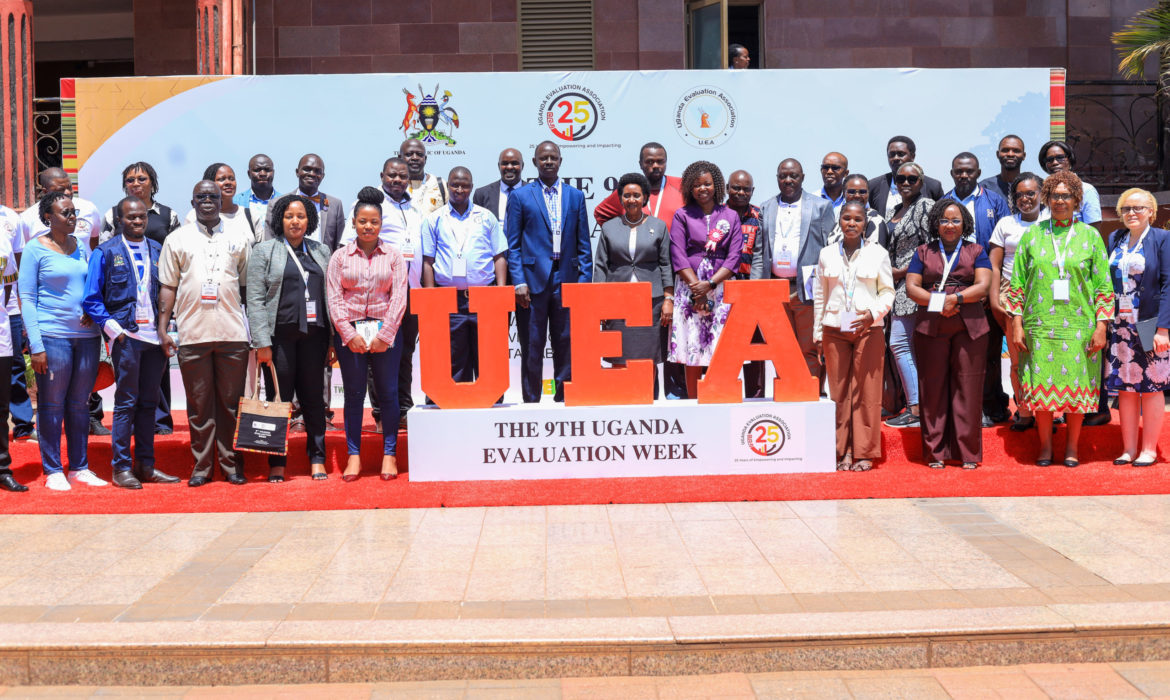
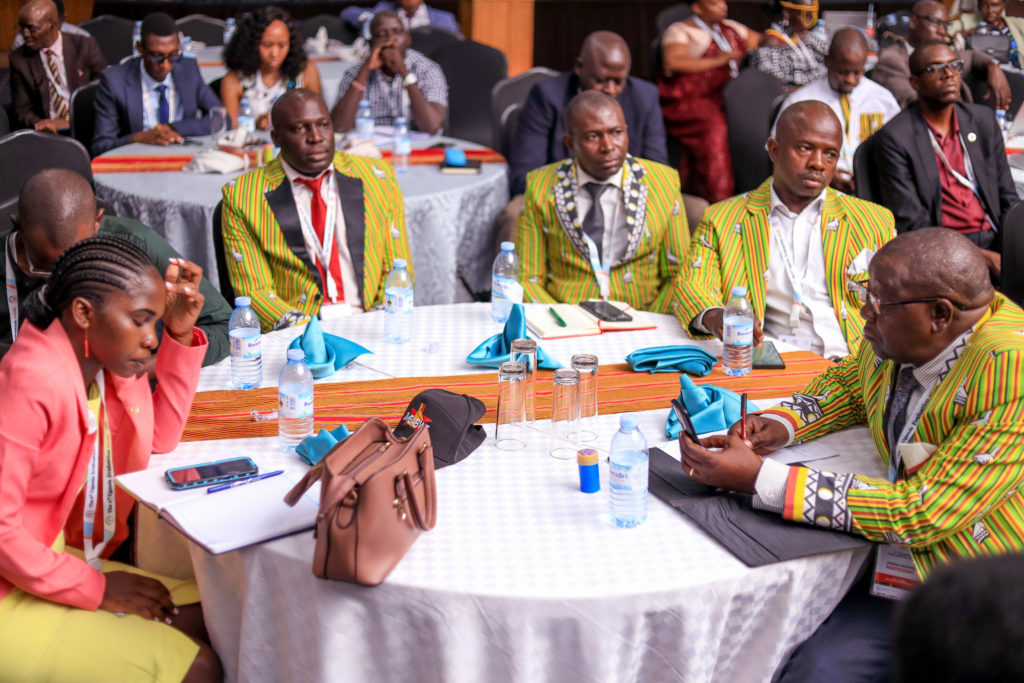
The 9th Uganda Evaluation Week (UEW) took place from 4–8 May 2026 at Silver Springs Hotel in Kampala, bringing together evaluation practitioners, policymakers, government officials and development partners under the theme “Innovate. Include. Impact: Advancing Evidence for Transformative and Sustainable Development.” The event also marked a major milestone – the 25th anniversary of the Uganda Evaluation Association (UEA) – and Twende Mbele was proud to be part of the celebrations. The conference also highlighted Uganda’s growing role in advancing evidence-informed governance and evaluation practice on the continent.
Twende Mbele’s Active Participation
Twende Mbele representatives were involved in multiple activities throughout the week. Parfait Kasongo, Communications Coordinator for Twende Mbele, delivered a presentation titled “Ten Years of African Peer Learning in M&E: Governance Lessons from the Twende Mbele Partnership.” Drawing on a decade of experience, he argued that the challenge of evidence use in government is ultimately institutional rather than technical.
Kasongo highlighted three key governance contributions from the past ten years: first, evaluation is increasingly seen as a tool for improving performance, not just compliance; second, peer learning has created practical spaces for officials to exchange real experiences; and third, continuity has helped built the institutional trust needed to engage with sensitive findings. He also pointed to rapid evaluation as an important shift, generating timely evidence for decision-making – including a Uganda case study where a rapid evaluation confirmed benefits to communities while identifying serious disbursement delays.
Both Parfait Kasongo and Stephen Ampem-Darko, Twende Mbele Management Committee Chairperson, also attended the two-day pre-conference workshops hosted by CLEAR-AA, which covered topics such as equitable evaluation and tools to embed evidence use in government systems.
Showcasing Twende Mbele’s Publications
Throughout the conference, Twende Mbele also hosted an exhibition booth in the main networking area. The booth displayed a range of Twende Mbele publications, including all of the partnership’s practical guidelines developed over the past decade. Of particular interest to Ugandan participants were two rapid evaluation reports from Uganda – one on the system for sharing national park gate revenues with surrounding communities, and another on local government staffing.
Delegates from government ministries, civil society, and academia visited the booth to discuss how the tools and approaches could be adapted within their own institutions. The exhibition provided a valuable opportunity to translate conference discussions into tangible resources that participants could take back to their institutions.
Addressing the Elephants in the Room
In the final keynote address, Stephen Ampen-Darko spoke on “From Compliance to Learning: Institutionalising Evidence Use for Accountable Governance.” He argued that while African governments have made significant progress in developing M&E systems, the core challenge remains consistent: evaluation findings are produced, but not always used. Decisions are shaped by political priorities, institutional constraints and timing.
Ampem-Darko’s message resonated deeply with the conference’s accountability strand. He stressed that embedding evaluation into routine government decision-making remains difficult. Traditional evaluations are often too slow, not aligned with decision cycles, or disconnected from implementation realities. He called for a shift—from M&E as a compliance tool to a learning mechanism that improves public service delivery.
The Call for Accountability and Learning Balance
The opening ceremony featured a spirited traditional performance by the Crane Performers Ensemble, setting the tone for a week of reflection and debate. Permanent Secretary Julius Nkeramihigo, representing the Minister for General Duties, delivered a striking address:
“In Uganda, the issue is not so much about learning on evaluations. It is more on how evaluations contributes to accountability in the country. We want to do more learning, but we must keep a closer eye on accountability because this is what the citizens are expecting of us.”
His words set the stage for the week’s discussions, framing a central tension: while peer learning and capacity building are essential, the ultimate measure of evaluation’s value lies in its contribution to accountability. Twende Mbele’s presentations engaged directly with this tension, offering practical pathways for evidence to inform not only learning but also oversight and performance management.
Expanding the Peer-Learning Platform
Twende Mbele’s participation at UEW 2026 was timely. Earlier this year, Uganda welcomed four new members—Côte d’Ivoire, Malawi, Nigeria and Tanzania—into the Twende Mbele partnership. This expansion strengthens the peer-learning platform, enabling more African governments to share tools, systems and honest reflections on what it takes to institutionalise M&E. As Stephen Ampen-Darko noted ahead of the conference, welcoming new members is not just about increasing numbers but about enhancing the quality, relevance and impact of shared work.
As the partnership enters its second decade, the message from Kampala is clear: evidence on its own does not change outcomes. What matters is whether it shapes decisions. And that, as the week’s discussions affirmed, requires not only technical capacity but sustained political will, institutional trust and a relentless focus on results for citizens.
 CreativeBox
