

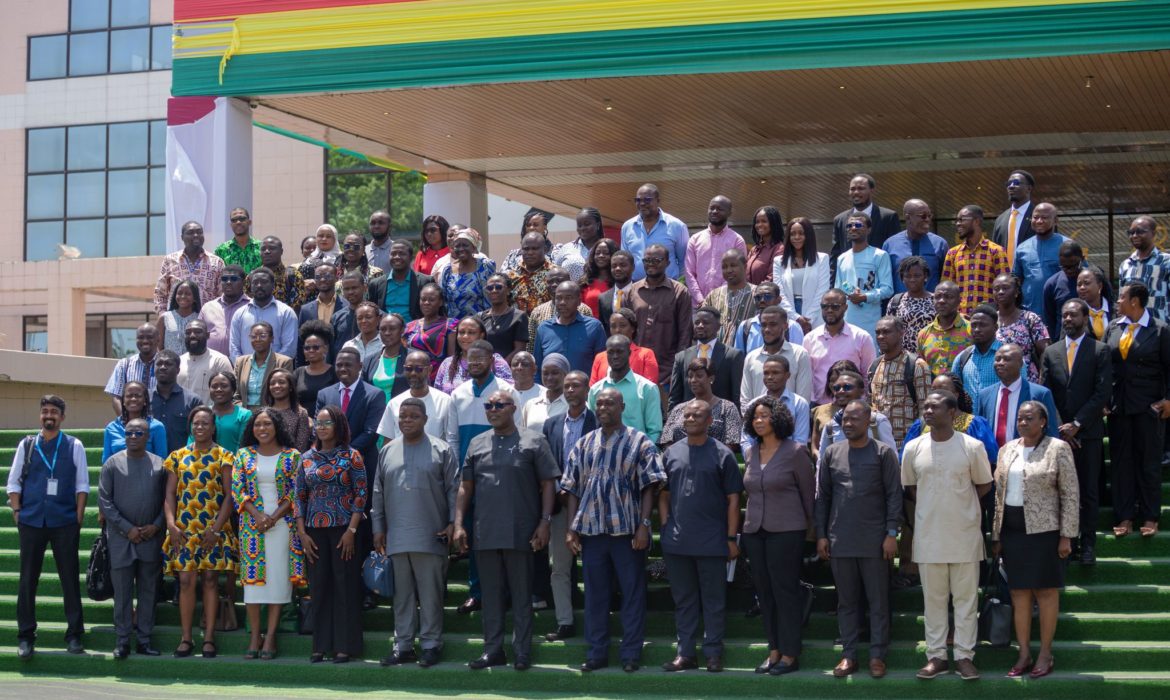
How Ghana Evaluation Week is transforming M&E from compliance to strategic governance, and what it means for African peer learning
Ghana has moved beyond rhetoric. The inaugural Ghana Evaluation Week, held in Accra this October, wasn’t just another conference. It was a statement that evidence-based decision-making now sits at the heart of Ghana’s development agenda.
The Development Insights Hub (DIH) organized the event with the Ghana Monitoring and Evaluation Forum (GMEF), the National Development Planning Commission (NDPC) of Ghana and development partners including Twende Mbele. Twende Mbele is a peer learning partnership of African governments who are using evaluation evidence to improve governance and service delivery. At the Accra International Conference Centre, government agencies, policymakers, M&E professionals, researchers, civil society, and media gathered around a clear mandate: make data use a daily habit, not an exception. This article focuses on day 2 sessions and discussion points that emerged.
“Without data we’re flying blind.” – Former UN Secretary General Kofi Annan
Moving Beyond Guesswork
The theme captured both ambition and humility: “Ghana’s Evaluation Journey: Progress, Challenges and the Way Forward.”Ghana recognizes that building a resilient national M&E system takes more than technical infrastructure. It demands cultural transformation, institutional coordination, and genuine partnership.
What stood out was the focus on practical application. This wasn’t evaluation theory in isolation. It was about making every policy and program more targeted, effective, and accountable through systematic use of high-quality data.
Digital Innovation Meets African Context
Ghana is embracing technology while ensuring it serves African realities. Sessions demonstrated how data systems across ministries are being harmonized to enable real-time decision-making, with platforms linking health, education, and agriculture databases for integrated reporting.
The conference introduced Evaluation.ai, identified as the first AI tool specifically developed for M&E, while emphasizing the critical need to include African languages in AI applications. Presenters also showcased tools like Notebook LM for synthesis and exploration, and Nano Banana by Google for generating images for communications like posters and social media content. Practical demonstrations featured Power BI, KoboToolbox, and Tableau for data visualization.
The message was clear: technology is an enabler, but it must be adapted to local contexts and designed to enhance, not replace, human judgment in evaluation practice.
The conversation emphasized that civil society organizations need to be better engaged to feel genuinely integrated into the M&E ecosystem. Not as afterthoughts, but as core partners from design through implementation. Similarly, the media’s role in translating evaluation findings into public discourse was highlighted as essential for democratic accountability.
Ghana is also leveraging international tools strategically. The National Evaluation Capacity Index (INCE) Project, a framework successfully implemented in over 20 Latin American countries, is being adapted to measure and strengthen Ghana’s institutional evaluation structure. The explicit goal is to “make the Ghana Evaluation system knowable.” Ghana’s inclusivity score within this system is reportedly above average, and development partners are now exploring how to expand INCE to other African nations including Benin, Morocco, South Africa, and Tanzania.
Evaluation as the Key to Sustainable Development
UNICEF Ghana underscored a powerful reframing: evaluation is not merely a technical process. It’s the key to achieving the Sustainable Development Goals. For UNICEF, evaluation means impartial, systematic assessment that generates high-quality data telling the story of every child’s life in health, education, and well-being.
When evaluations include children, tools must be adapted based on age, gender, and context, respecting children’s ways of understanding and communicating. This human-centered approach to M&E, ensuring that measurement serves people rather than just processes, represents evaluation at its best.
What This Means for Twende Mbele
Ghana Evaluation Week offers concrete lessons for peer learning across Twende Mbele partner countries:
Data Integration as Strategic Imperative:
Ghana’s approach to cross-sector data interoperability demonstrates that integrated government data systems are achievable. The emphasis on unique identifiers and standardized protocols provides a replicable model for other African governments seeking to move beyond siloed reporting.
Communication as Core Competency:
Effective data visualization is not cosmetic. It’s essential for ensuring evidence reaches decision-makers in accessible, actionable formats. UNICEF’s demonstration of dashboards communicating child-welfare indicators showed how well-designed visuals enhance both understanding and uptake among non-technical audiences.
Institutional Anchoring for Sustainability:
Embedding evaluation training in institutions like the Ghana Institute of Management and Public Administration creates long-term capacity beyond individual practitioners. This institutional approach, combined with sustained investment in mentoring, offers a pathway to sustainable M&E capacity across the continent.
Partnership as Force Multiplier:
The collaboration among government, UNICEF, development partners, civil society, and academia demonstrates the power of coordinated action. Ghana’s National M&E Forum provides a platform for sustained dialogue and knowledge exchange. A model worth replicating.
Looking Forward
Twende Mbele will document Ghana’s digital data integration model as a case study in our 2026 Peer Learning Series. We’re also exploring collaboration with Ghana Institute of Management and Public Administration (GIMPA) and UNICEF on joint evaluator training modules and planning to develop a brief on data visualization and M&E uptake strategies.
Ghana Evaluation Week demonstrated that when national ownership meets institutional coordination and technological innovation, M&E can transform from a compliance exercise into a strategic governance instrument. This is the vision Twende Mbele exists to advance: using monitoring and evaluation as a catalyst for improved performance and accountability across African governments.
Ghana has shown the way. Now the question for the rest of us is: how do we follow?

 CreativeBox
